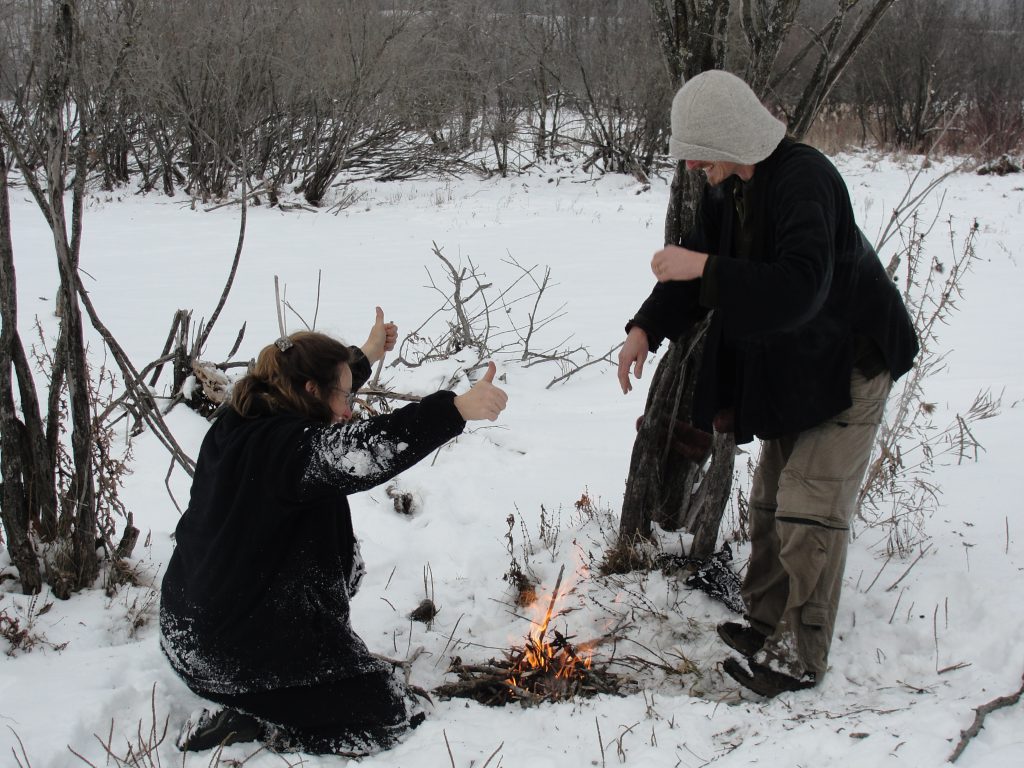
Paracord Bracelet Survival Challenge

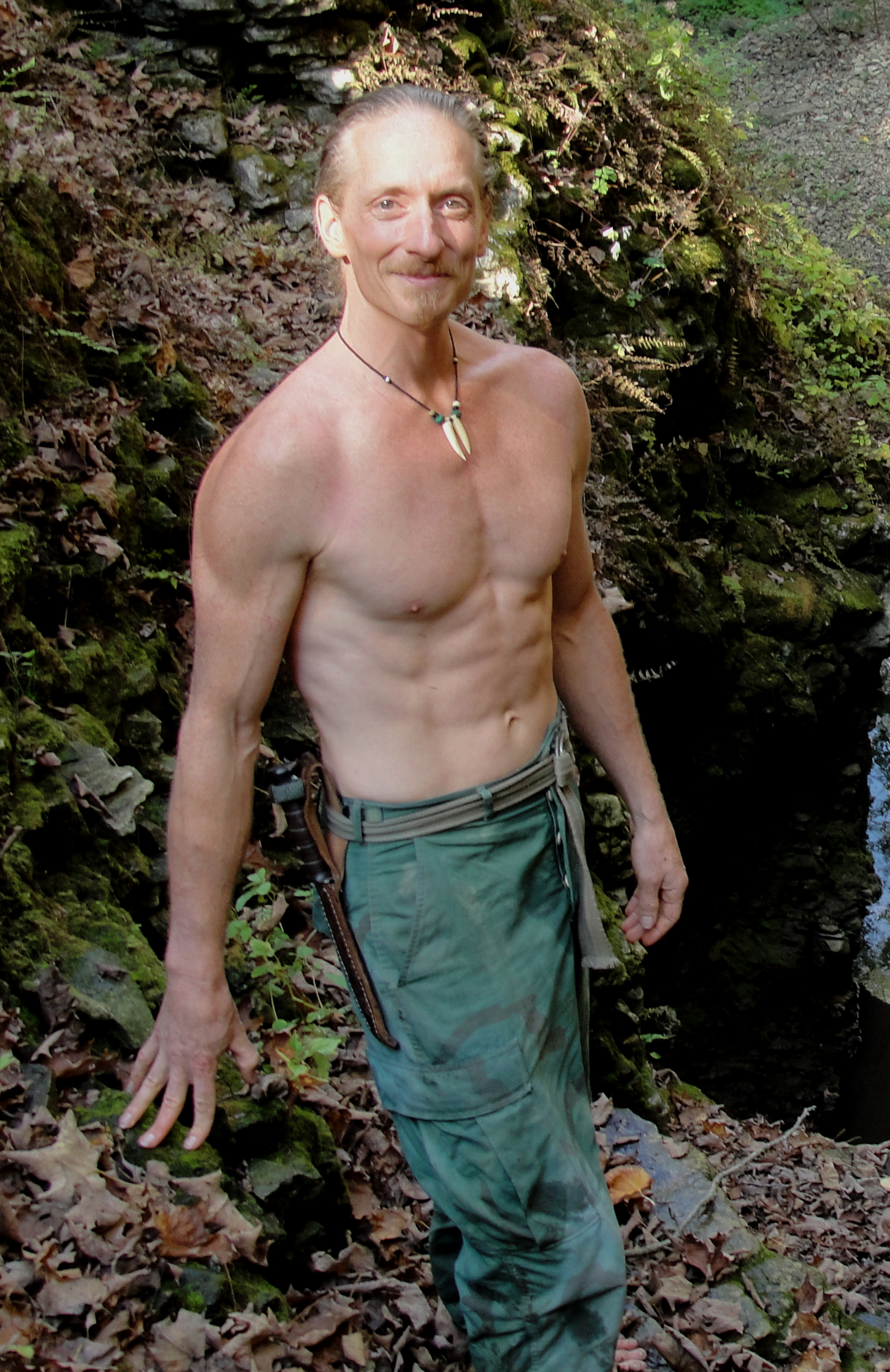
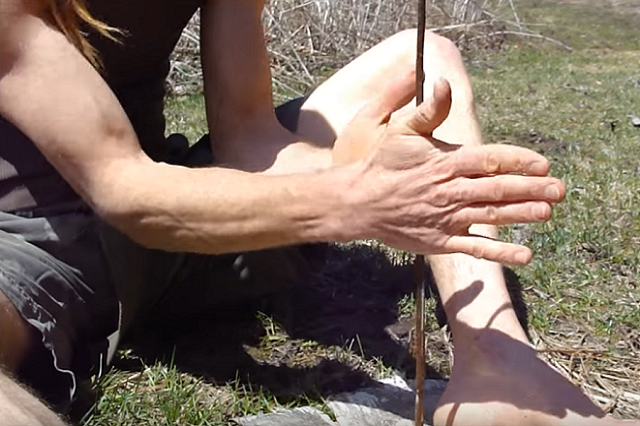
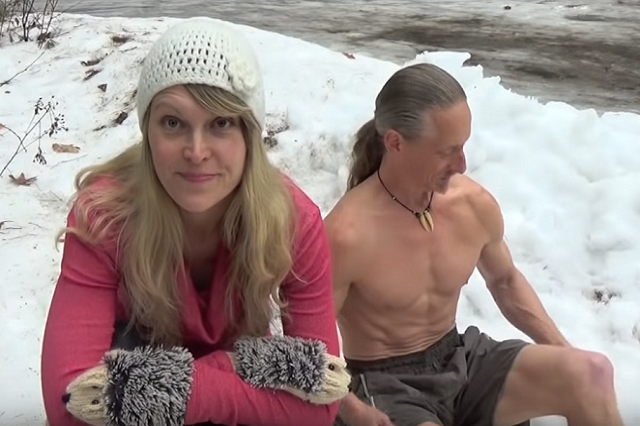
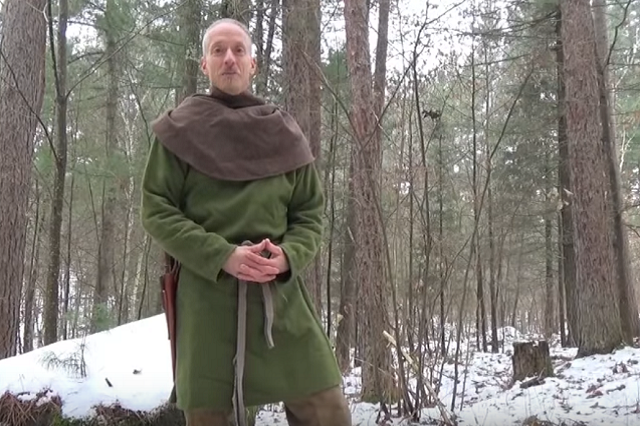
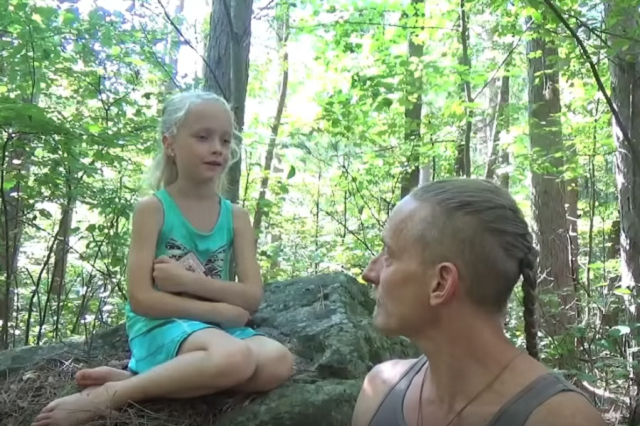
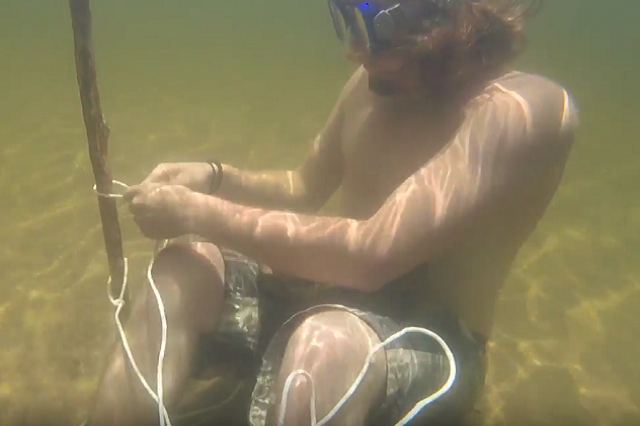
I recently took on a 24-hour survival challenge, going out into the woods with only a quick-deploy paracord bracelet (about 12 feet of paracord) for equipment. It wasn’t just about going out into the woods and enduring 24 hours out there. The goal was to get comfortable — to find or create a good shelter, to find enough food to fill my belly, to start a fire, and to secure safe, drinkable water.

A month-long student of mine, Adam Unger, recently took on (and succeeded!) at this challenge, and I basically followed the same strategies he used to meet his goals.

Here’s the video:

The basic idea is actually quite simple. Build a shelter. Gather materials for a bow-drill kit, including finding or knapping a stone tool to make your notch (unless you’re fortunate enough to find a “notch-making power tool”, like I was. Gather stones for hot-rock water boiling and for using at night to cuddle in order to keep you warm. Coal-burn a water container, and find water. Boil it with the hot-rock method. Forage for food.

Some details: 

To keep warm at night, I sometimes hugged the warm rocks, but I also used them to form a “wall” in front of me while I was back in the lean-to. The pine boughs kept my back warm, while the hot rocks heated my front. I had to leave an “escape route” so that I could get out and tend the fire periodically.

Food was especially easy, as the spring ephemerals were up. During other times of the year, food might not be quite as easy to come by.

The bowdrill went quite well, especially after I found the “power tool”. Otherwise, cutting each notch takes a half and hour or more. My board was thin enough that I only had one chance to get a coal before I would burn through the board. Again, this would have been a tense situation if I was cutting notches with my “caveman multi-tool”. With the power-tool, it would have been easy to burn a second hole or third hole in my board. In any case, it worked the first time, and I was very happy to have fire.

It is TOUGH to carry water in a shallow container like the one I made. I had to walk a long way with the water, and spilled a lot of it.

After making the bowdrill, I suggest re-making your bracelet and wearing it again. It can also be stored in your camp, as long as you are sure you won’t get lost. I wore mine for a bit, then stored it.


Share

Gourmet Wild Edibles — “Spring Roll”

Any reader of Euell Gibbons knows how his descriptions of wild plants can make you hungry, especially when he gets a little “gourmet”. In the “Gourmet Wild Edibles” series, ReWild University will show you how to create some delicious recipes using only wild-gathered ingredients — the sort of yummy food you can create during a “survival” outing. Video is first, then a description of ingredients and preparation below.

First, get familiar with the following spring edibles:

Virginia Waterleaf (Hydrophyllum virginianum) Use the young leaves, as the older ones get a bit hairy. These can serve as ‘bulk’.

Spring Beauty Greens (Claytonia virginica) Leaves are delicious. Take only one leaf from each plant. These add a juicy succulence and delicate flavour.

Toothwort (Dentaria laciniata) This is a seasoning. Very horseradish flavoured. Add a lot if you like it, otherwise use sparingly.

Basswood (Tilia americana) A wonderful green, can add nutritious bulk to your roll.

Trout Lily (Erythronium americanum) With its distinct flavour and crispy texture, this is a great addition, and can serve as the outer wrap if leek is too strong. Some people report a tickle in the back of their throat after eating it.

Wild Leek (Allium tricoccum) The fabled wild ramp. Very strong onion/garlic flavour.

These six ingredients serve as a woodland version of the spring roll. Some other wild additions can include dandelion greens for a touch of bitterness, sweet cicely for sweetness, spring beauty roots or trout lily bulbs for more crunch, young wood nettle, watercress, and many others. These are so easy to make, and are a fun way to fill your belly in the woods. Simply fold your greens tightly, wrap in a leek or trout lily leaf, spear with a small stick or grass stalk, and you have your spring roll. This knocks the socks off of campers or survival students if you bring a birch-woven platter back filled with these rolls.

Experiment and enjoy!


Share

Why We Get Bored

I have a new client who will be partaking of the “wild monk” 1-month Metamorphosis program, beginning tomorrow. He’ll be living for the entire month in the debris hut shelter I built last autumn. Many challenges, adventures, and transformations await him, but he will have one initial hurdle that may be the biggest obstacle in his path. That is boredom.

Nothing To Do

Despite the fact that I’ll be meeting with him quite often, and that he’ll have daily nature-immersion, fitness, and mindfulness challenges, he’ll still have a lot of unstructured time alone in the woods. Without a cell phone, ipad, e-reader, or other “devices”, he’ll have little to distract or entertain him. Coming from a culture that gives us constant “noise”, it might seem at times like there is nothing to do. And that can signal the start of a wrestling match with boredom.

Boring to some eyes, and enchanting to others.

Boring to some eyes, and enchanting to others.

Speed Addiction

It’s easy to think that boredom is a lack of stuff to occupy us. But in reality, boredom is a state of mind, a symptom of a mind that is always racing. A bored mind is an addicted mind, and the boredom is the “letdown” when we’re not getting our speed drug. In this case, the speed “drug” consists of things like checking our email and iphone, watching TV or listening to the radio, texting friends or engaging in drama. Are you addicted to any of these things? It’s easy to find out. Go without for ten minutes, a few hours, or a day. Do you get bored?

What is Boredom?

Boredom is created when there is a contrast between the speed that our mind is accustomed to, and the speed at which we’re intaking stimulation. A constantly high stimulation level raises our “mind speed”, and then when our stimulation level is decreased, we feel a sense of lack and disquiet that we call “boredom”.  It’s a clear sign that our mind speed has gotten out of control, and that if we wish to experience mindfulness, we need to take a good look at our life right away.

There is no such thing as a boring situation. Only a boring mind.

In other words, it is only a speed addicted mind that can feel boredom. Boredom is not possible if your mind is slowed down to a state of open mindfulness.

Nature Slows Us Down

Nature is a natural slow-downer. Life’s pace slows immensely when you’re waiting for hours to see an animal emerge from its den, or watching the sun slowly rise through the trees. Watching a fire burn down into embers or sitting in a tree to watch the moon create shadow-plays on the forest floor are experiences that ease us into a state of open mindfulness. The transition can be difficult, since boredom feels painful. But the rewards are enormous. You see, a speed-addicted mind is only satisfied if it has constant stimulation, but it is also often overwhelmed by that stimulation. In other words, it “needs” the very thing that causes it to suffer. But a slow, mindful mind has no need of constant stimulation (or perhaps more appropriately, it recognizes the stimulation in something as simple as taking a single breath). Even better, a slow, mindful mind is capable of existing within a sea of over-stimulation, and it is not overwhelmed by all the “noise”. It can exist comfortably at both extremes.

Getting Un-Bored

Unfortunately, I’ve found no way to overcome our boredom addiction except by going through the withdrawal symptoms. As we slow down our minds by reducing stimulation, it will experience some boredom. However, there are many practices that can ease the journey. Yoga, meditation, or simply time spent in nature are among the best. Our mind still has something to focus on (to stimulate it), but the lack of “noise” in these practices can move our minds quickly in the direction of mindfulness. My favorite, of course, is nature. If my new client can make it through the first night and day, he’ll probably feel that his mind is swiftly opening. His senses will be expanding, his thoughts slowing down, and the world will be becoming brighter, more colorful, more vibrant.

Most of us have been addicted to speed for all of our lives, the addiction beginning the moment we were set down in front of a television. We have no idea how rich and amazing the world is, because we’ve always been divorced from it, entangled in our own thoughts, judgments, and concerns. The addiction can feel challenging to break, but the moment our mind begins to open, there is no going back. we suddenly realize how much we’ve been missing, and the desire to experience more openness can be overwhelming. This is the beginning of becoming our wild, natural selves. Curious, passionate, open, compassionate, and Alive in the fullest sense of the world. This is the wild you that is your birthright.

Claim it.

Share

Restoring the Wilderness Through Wild Running

I certainly love our dogs. Suka and Gryphon are friendly, beautiful, and playful. They are also allowed the run of the lands surrounding our home. As half-wild dogs, they fill their days with lazing in the sunshine, exploring the woods, and chasing animals.

sukagryphon

In the past this often bothered me. Especially in their youth, they used the tactics of companion hunters, herding rabbits and raccoons into their jaws. I can’t be sure, but I think that once they even killed one of the wild turkeys that have played such a powerful part in my own life.

With their tendency to ravage the wildlife, I always considered them a negative impact on the local ecosystem. When we lived at Sweetwater for ten years, as stewards of a small six acre plot of forest and stream, I’d sometimes get quite frustrated with them. Instead of torn and broken rabbits lying in the snow or grass, I dreamed of rabbits under our bird feeder, deer coming into the yard, and having to chase raccoons off the deck with a stick. In short, I imagined a healthier ecosystem where we’d be able to re-connect with the wildlife that our dogs were always terrorizing.

Rethinking

Then we read Where the Wild Things Were by William Stolzenburg. In the book, the author presents a convincing argument, citing many field ecologists’ work, that apex predators play a key role in maintaining healthy ecosystems. Interestingly, they do this not only by regulating the number of their prey, but perhaps more significantly, by creating a culture of ‘fear’ (I’d prefer to call it a culture of awareness or vigilance) among the prey. In other words, the prey’s behavior is altered when they are aware that predators share the forest with them. In Yellowstone, the scientists found that elk tend to avoid the edges of streams when wolves are present. Stream edges are places where elk can be easily trapped by wolves, and the elk know it. Without as many elk, the willows can grow, which creates healthy stream banks for many species. The result is that the riparian ecosystems have seen a powerful recovery since the wolves have been re-introduced.

At Sweetwater, we often noticed that our six acre plot seemed strangely abundant in certain plant species. There were raspberries and black raspberries. In the spring, the trilliums bloomed, and our woods were home to bloodroot, soloman’s seal, hepatica, and jack-in-the-pulpit, all in great abundance. Yet, during our hikes in the surrounding woodlands, we found that these plants were much more difficult to come by. We didn’t find trillium in any of the hundreds of acres that surrounded us, and there were scant wild berries to be found in the 250 acres of woods and fields that the neighboring farmer let us hike. Other natives were rare hidden gems scattered through forests that often felt a little empty and over-grazed.

We had never thought much of this until we began to read Stolzenburg’s book, and to consider that there might be a reason for the green abundance on our land. This is the place where our dogs most often roam, play, and hunt. Might Suka and Gryphon inspire a culture of vigilance among the prey species — the main browsers — in our ecosystem? They’ve never killed a deer (the photo above is of a deer that a hunter shot that later died of its wounds — the dogs dragged parts of it back home to enjoy), but they certainly kept the deer running. As for rabbits, the dogs play at least a small part in keeping the numbers down. Perhaps the dogs are the protectors of the lovely, pink-tinged trillium?

**The Caring For Deer and Forests website has an interactive tutorial that depicts the impact deer have on an ecosystem.**

A Wild Thought

This thinking has brought me full-circle back to a year when I devoted myself to a persistence hunt of a wild turkey. What might happen if (in addition to re-introducing apex predators), humans took up a new ‘sport’ — chasing animals? Might not cross-country, on/off- trail, and ultra runners have some fun, connect with nature, and also do some ecological good if they began taking their running out into the wildlands? What if humans began chasing animals?

I know, it’s an odd proposal. Yet consider what it might do. The runner’s goal wouldn’t have to be to catching an animal. Indeed, if an animal turned out to be injured (as did one deer I began chasing last autumn), the runner could give up the chase and search for a healthy animal to pursue. The goal wouldn’t be to catch animals — only to give chase. The human runners would be fulfilling half the role of the apex predators — inspiring a culture of vigilance among the prey. If enough people in a given area took up the ‘sport’, it might alter the prey’s behavior enough that some of the browse might return. With a return of the plants, native butterflies and songbirds might come back to the area. Insects and amphibians that were no longer supported in the ecosystem might find it suitable once again.

At the very least, it would get people out into the woods more. I can envision a culture of minimally-shod or barefoot runners enjoying long runs through the wild places, connecting with nature and bringing back stories of their adventures. At best, if such runners were set loose into areas that have suffered “trophic cascade” (a loss of numerous species that is triggered by the removal of apex predators), it might alter the browsers’ behavior enough to make at least a small difference in the health of various ecosystems throughout the world.

Are you a runner? Care to give it a try?

Share

Kill Your Television

Conquer the Dark One. Kill your television.

Conquer the Dark One. Kill your television.

Be sure to check out the end of this article to learn about TV-B-Gone, the equivalent of bug repellent for annoying televisions (which is all of them). This invention gives me very mischievous thoughts . . .

I’m not one to suggest violence as a healthy way to solve a problem. But there is one dark evil lurking in this world that deserves no quarter. Heartless, it won’t hesitate a moment to drag your mind into its clutches, lulling you into a hypnosis. There, it seeps addictive poisons into your brain, making you want to spend more and more time in front of it, where you will stare, mindlessly, as it liquefies your consciousness.

There is only one escape from its nefarious clutches. Kill your television.

Anything is Better Than Watching Television

I won’t depress you with the statistics. If you’d like to experience them yourself, you can find them here: Television Watching Statistics. But one thing is clear. You’re better off doing anything else besides watch TV. In fact, you’re much better off doing nothing at all.

Like many things in our culture, it’s easy to look askance and ignore the truths that are right in front of us. And it doesn’t take much to see how addictive television is. In some homes, it is on almost all the time, “keeping people company” with its little whispers of commercialism, violence, drama, and redundancy. Like other addictions, it can cause problems with one’s ability to socialize (it’s difficult to connect with other people when your brain is in a mind-meld with your TV). And you’ve probably heard the rumor that you burn more calories when you sleep. It wouldn’t surprise me if this was true, as your brain is actually doing something when you sleep, while it basically shuts down when you plug into the tube.

The fact is, we live in a world that is amazing. You can take a walk outside and be amidst a never-ending world of species, social interactions, and perceptions. You could go and talk with someone you don’t know, or you could ask someone in your family what is meaningful to them, or you could sit down in the grass and watch it blow gently in the wind. If you’re a nature-y sort of person, there are hikes to go on and an endless list of skills to practice. Every person alive has latent dreams and talents. Yet for many modern humans, it sounds almost painful to sit down for a two-hour talk with someone (thought it sounds easy and enjoyable to sit down for a two-hour season premier of the latest drivel).

The 99%

Okay, here’s one of those statistics. 99% of us own one. And if we do, we probably have struggled with addiction. We can probably link it with that bulge forming on our bellies, with our forgetfulness, with a feeling of boredom if we’re away from it too long. It’s not entirely our fault. Televisions have been presented as “normal” in our culture, and almost no one is pointing out that it’s a highly addictive, mind-altering drug that affects your entire life, contributing to ill health, short attention spans, and endless images and songs that run through your head. Luckily, the solution is simple. Kill your TV. Just do it.

The 1% 

If you’ve made the transition to the 1% who don’t own a TV, you know that you could never go back. Now it is seen for what it is, offering up insipid junk that has no actual value or attraction. Once you break free of the addiction, TV is just noise.

As a one percenter, you have tons more time in your life. You probably have retained the ability to sit quietly and observe the world around you. You see the wonder and amazement that is always present. And you enjoy a higher quality of fitness, health, and mind than you would if you were watching TV all the time. Bravo! Now you have the additional work ahead of you to educate others. Help them see that watching TV is not “normal”, and it’s not healthy. Take people out for walks, or talk with them. Help them to notice that there’s a whole world outside of CBS and NBC. Some are only mildly addicted, while others are full-blown junkies. In either case, you can serve as a reminder that the TV isn’t the benign thing that many think it is.

How to Slay the Beast

First, lure your television out into a lonely forest . . . well, actually, it’s a bit tricky trying to decide what to do with your TV. Do you throw it away or give it away? It may be true that giving your television to someone who is a dedicated TV user can delay or prevent them from purchasing a new one, and thus removes some revenue from the TV manufacturers and theoretically prevents one more television from being built. In effect, by giving the TV away, you’re preventing them from selling one more TV. In my opinion, the pain you will cause the TV manufacturer by preventing one sale is very minimal, especially if you’re hoping to inspire others to break the TV habit. So the obvious solution is to send your TV to the grave.

Oh Yes. About That TV Repellent . . . Meet TV-B-Gone

Mitch Altman is a true hero in today’s world. He’s the inventor of a small, black unit that you can easily hide in your palm. A sort of universal remote, it can turn almost any television off. Is your family gathering being interrupted by a blaring television? Point and push the button, and the screen goes pleasantly dark. “Whoa,” you can say. “Was there a power failure?” Act dumb and surprised. When they turn it on again, just push the button. Eventually they’ll get so annoyed that they’ll give up (though their addiction may inspire them to fiddle with the television for an hour or more, trying to get it working properly).

Mr. Altman’s TV-B-Gone works almost anywhere. Those televisions playing in restaurants? Zap. When you’re shopping? Zap. It’s loads of fun. It’s like bug repellent for televisions. Awesome.

Want your own? Visit Mitch Altman’s site and buy one there, and follow his links to some more interesting information about television viewing. This is one piece of technology that is worth supporting with your dollars. Go Mitch!

Share

How to Find and Use Polypore Tinder Fungus

There are times in your adventures when you may need to start a fire when fire conditions aren’t friendly. Perhaps your tinder and twigs are wet, and need a prolonged heat source to dry them out. Perhaps you’re in numbing cold, and want something reliable to catch and hold your first spark (and then to provide heat to warm your fingers back up).

Who would think that a fungus would be the answer? Yet there are certain fungi that, when started with a spark, will form that spark into a coal that grows and grows. Not only does it burn for a prolonged period of time (10-20 minutes for an average-sized fungus), but it burns with considerable heat. Better yet, that heat source is condensed, unlike a fire. You can pick it up, carry it with you, or (don’t start yourself on fire) tuck it under your clothes to warm your body core.

This video will show you how to find the common polypore tinder fungus, sometimes called the hoof fungus or false tinder fungus. Although there are probably various species that function in the same way, Fomes fomentarius is the species most often cited.

After the video, I’ll explain more about finding the fungus, using it, and deliver a special warning for the foolhardy.

In my area of Wisconsin, almost any grove of white birch will have these fungi growing on them, though they can occasionally be found on other trees. Note that the polypore tinder fungus grows in a wide band of latitude that stretches around the world, so that it can be found and used in Europe, Asia, and southern Africa. It is not found, to my knowledge, in the tropics.

As the video describes, the most functional fungi are ones that are neither too fresh nor too old. You want the pore structure to be intact, but when it’s alive it contains moisture and won’t work its magic. The bottom should be dark brown or black, with defined pores. When you poke with your finger, it shouldn’t crumble, but should feel quite hard.

To get a spark to take, I’ve often had the best luck breaking away the top of the fungus, clearing away some of the fluff that some people call “amadou”. (Amadou is a topic for another post). Once you’ve exposed the top platform of the pore structure, use your fingernail, a stick, or rock to “fluff” it, scraping back and forth. If you can get numerous small “ends” to be sticking up near the edge of your platform, all the better. Practice with this to get the feel of getting the right amount of “fluff”. Now direct your spark onto the fluff. Flint and steel will work if you have a nice fluff, and a firesteel will easily ignite it. When it takes, you will usually see the small, orange coal begin to glow right away, but sometimes you won’t see it at all. The scent, however, will let you know that you have a coal burning. Listen to your nose!

If your coal has caught an outer pore tube and the tube is unbroken, even a small spark will now burn on its own, slowly growing. If you’ve caught an inner tube or your tube is broken, some gentle blowing can help the spark grow into a small coal. But either way, once you have even a small coal starting to grow through the unbroken pore tubes, you can leave the tinder coal to grow on its own while you prepare your fire making materials. (Just make sure you don’t set it anywhere that it will catch things on fire unintentionally!) Of course, if you want to speed the coal’s growth, blowing or holding it in the wind will accomplish this.

To start a fire with your fungus coal, simply apply it to whatever tinder you’re using and start blowing. You should have flames in a few moments if your tinder is dry, and if it is wet, your coal will slowly dry the tinder until it can take. In extremely wet conditions, build a tipi fire, place your coal under your tinder bundle in the fire’s heart, and then lightly blow in order to generate some good heat. That heat will evaporate moisture, and eventually your fire should catch.

Oh yes. That warning to the foolhardy. Note that it’s always a good idea to carry some tinder fungus with you in your pocket, pack, or fire-making kit. But realize that once this fungus is burning, it is VERY TENACIOUS about holding on to its coal. Twice now I have made the mistake of thinking that I put the fungus out, only to find that it was hiding a coal deep inside. The first time I put it in my pocket, and a half-hour later felt something rather hot on my thigh. The second, I placed it in a coconut-shell fire-making kit that was full of charcloth. I didn’t realize my mistake until I smelled smoke (about ten minutes later), and opened my kit to find all of my charcloth glowing orange. Not a pleasant surprise.

You should now be equipped with the knowledge to find and use the polypore tinder fungus. Get some practice with it, keep some with you when you’re in the woods, and explore its versatility.

Share

Opening Enrollment for Metamorphosis and PR/EP

Metamorphosis (link above or on the right), is a 3- or 11-month one-on-one (or small group — your choice) program that immerses you in wilderness living skills, martial arts, mindfulness training, and connecting with nature. PR/EP is the “prepper” version of Metamorphosis, for those who are looking for a more “tactical” approach to training. For both programs, Kenton is now taking applications for the spring training season. He can only take on a very limited number of students per year (between 2 and 3 individuals or groups), so now is the time to contact him if you’re interested in training during 2013.

Because PR/EP is detailed on another site, I’m giving more information on it below –

Imagine starting a fire after you’ve fallen through ice into freezing water. Imagine hand-to-hand combat on a stony ridge. Imagine gathering wild edible plants and cooking them over a fire that you started without any matches. Imagine being able to keep your calm in any situation. You don’t have to imagine any more. Come to Wisconsin and enroll in PR/EP!

To get detailed information on PR/EP, click here.

newpreplogoReady for the end of the world? The recent meteorite strike in Russia certainly put things into perspective for a lot of people — our society may seem like it will be here forever, but history makes it quite clear that societies rise and fall on a regular basis.

PR/EP is a little different from other “survival” schools and courses. It is definitely not a “hole-yourself-in-a-bunker-with-your-AK47″ training program. Instead, it stresses skills that will not only prepare you for the possibility of emergency situations (whether that’s a full-blown societal collapse or a natural disaster, such as Katrina), but will enrich your current life. These are skills like martial arts, ancestral skills, wilderness “survival”, developing awareness and emotional resilience, and blending-and-flowing with your environment.

You’ll learn:

  • Immersive wilderness survival tactics — able to provide for yourself and loved ones indefinitely in a wilderness setting.
  • Self defense/unarmed combat/submissive martial arts.
  • Escape, stealth, reconnaissance, and movement tactics to make sure that you can get out of dangerous settings, establish a safe haven for loved ones, and keep track of external events.
  • Preparing emergency plans adaptable to the current state of social stability.
  • Physical and mental skills to ensure the highest degree of proficiency in stressful situations.

Will you be the one others can depend on?

What if every family had a person who was highly trained in these skills? Could that person be you? PR/EP training is highly intense. It’s not just about having earned a badge — it’s about developing your skills (and your body and mind) to their fullest, so that you are honestly ready to meet any challenges you might face. As a graduate, you’ll have a new kind of confidence, living without fear, frustration, or stress. Are you ready to take on this challenge?

In-Depth Training

PR/EP (Personal Resilience and Emergency Protection) also gives training that is more in-depth than you’ll find elsewhere. Because you’re working one-on-one with your trainer for 3 or 11 months, you’ll get to cover all the bases — getting into top physical condition, adjusting your diet for long-term optimal health, and getting to test your skills under both normal practice situations and under high-intensity scenarios that ensure that you can perform when it really matters — when the going gets tough.

PR/EP also includes a certification option so that individuals can become instructors and help others to gain this skill-set. It’s a career that is fun, exciting, challenging, and best of all — you spend tons of time outdoors.

Starting this spring, PR/EP is open for enrollment. To make tuition more affordable, join with a group of your friends. You’ll relocate to Wisconsin, go through training that will leave you with a lifetime of adventurous stories to tell, and then return home as a new person, ready to take on the challenges of daily life with new confidence, and quietly ready to provide for your loved ones in the event of a natural or man-made catastrophe. Enrollment is extremely limited, so contact Kenton now if you’re interested in learning more.

Visit the PR/EP page for more information and contact info.

Share

Finding Out-of-Season Wild Leeks

Wild leeks, or ramps (Allium tricoccum) is a wild delicacy, often found for sale in high-end markets in the late spring. When it’s in season, it has large, green leaves (of a very distinctive colour that, if you learn to spot it, you can notice from a great distance through the woodlands). At the base of those leaves is a nice, succulent bulb that tastes something like onion (though it has its own special flavour).

What many people don’t know is that you can find leek bulbs in the summer or fall, if you know how to find their dried flower-stalks. It’s easiest to see them in the autumn, of course, but you can train your eyes to find them in the summer as well, with their distinctive black seeds on top. Note that the bulbs you get off-season won’t be the delicacies that you are used to, but they still pack tons of flavour, and if they are diced or simply added to a soup, they add a lot of goodness. Also note that the off-season bulbs will have a continuation of the flower stalk that runs down the middle of the bulb. This is hard and not very edible, so it’s best to slice it open and discard.

Here’s a video that shows you what to look for –

Share

Light My Fire Scout Firesteel Review

ReWild University gives the Light My Fire Scout 2.0 Firesteel the following rating:

***** Five stars out of five!

Note that ReWild University rates products in real-life, high-demand situations. We expect gear to stand up to rigorous use, and to work in worst-case scenario situations. We only want to recommend gear that performs when the going gets really, really tough.

firesteel strike

The Lowdown:

Pros – Compact and light. Ergonomic handles on steel and striker allow even cold-numbed hands to manipulate this firesteel. Has a hot spark that lights tinder much more effectively than other firesteels I’ve used. Most importantly, it’s super-easy to spark, allowing you to aim the spark even when you’re in a compromised situation. As you will see in the video, I could get a fire started even when hypothermic. Includes an emergency whistle on the striker.

Cons – Would like to see the lanyard be 440 paracord. Then again, they don’t try to fool you by using a “fake” paracord look-alike. It’s just a cord. Also, the lanyard attachment is a snap-together closure that can come apart if too much pressure is applied. A single-piece molded closure would be more secure. If I want to take it apart, I’ll just cut it. Finally, this firesteel costs a bit more than some competitors. But if you ever think you might use your firesteel during a life-threatening situation, you’re not going to want a cheap firesteel that doesn’t function for you. When it comes to firesteels, it pays to get a good one.

—————-

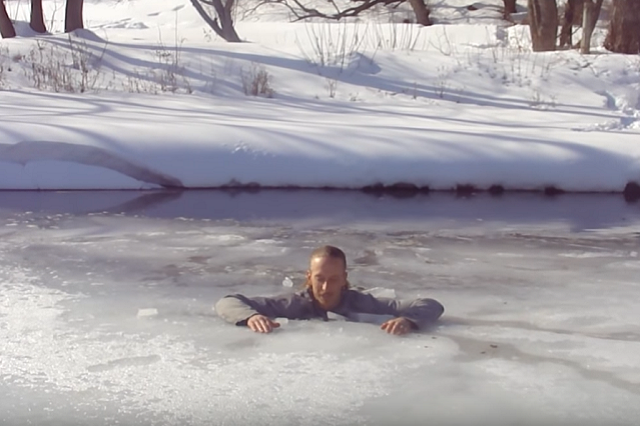
Watch the Extreme Gear Review of the Light My Fire Scout Firesteel. Starting a fire after falling through ice!

—————–

Unlike some other purveyors of firesteels, Industrial Revolution (the US distributor of these Swedish firesteels) doesn’t make claims that the Light My Fire Scout Firesteel will work under the “toughest” conditions.

They should.

This firesteel rocks. It has three properties that combine to make it THE firesteel you want in your bug-out bag if you’re a prepper, your backpack if you’re a backpacker, or your pocket if you’re a hunter, fisher, hiker, or bird-watcher. This is a firesteel that will start a campfire on a warm summer night, or will start a survival fire after you’ve fallen through the ice during a winter adventure.

The Light My Fire Scout Swedish Firesteel has three properties that set it above the competition.

The Light My Fire Scout Swedish Firesteel has three properties that set it above the competition.

The first of those three properties is its small size. It fits easily into a pocket, and will add almost no weight to a pack. It packs TONS of punch with a very small profile.

The second is the design of the handles. The deep “thumb-print” design allows you to utilize this firestarter even if you only have gross motor skills at your disposal (your hands are ice-cold or injured).

The third is the blend of metals they use in their firesteel. This metal strikes hot and very easily. If you’re compromised, you need that spark to land where you want it. With other firesteels that are more difficult to strike, it’s tough to get your sparks to hit their target if your hands are shaking from hypothermia.

The issue with firesteels is that they need to be very thoughtfully designed if they’re going to work when the going gets tough. And what good is a firesteel if it won’t work when you really need it? A good firesteel must function when you are compromised, and the Light My Fire Scout Firesteel does just that. This is a firesteel I’ll be recommending to all of my clients (and friends!).

Overview

I wish I could have tested this steel in colder temps, but winter is over so I’ll have to wait until next year. Nevertheless, I got my hands MUCH colder during the immersion test than they would be during the coldest of winter days. Although it took me ten minutes to get my fire, that was due to my shaking hands constantly scattering my tinder bundle. Once I did things properly and “pinned down” a small shred of birch bark, I had a fire in seconds.

While most small firesteels are difficult to use with the “pin down” method (especially if your hands are chilled), the Light My Fire Scout does it easily. Simply press the tip of the firesteel hard against your tinder (in this case I did it into my thigh — not optimal, but with my injured arm it was the easiest position to work in), then scrape. Your sparks will be at peak heat, and will go exactly where you want them. When I’ve tried this method with other firestarters (again, with cold hands), I haven’t been able to get enough grip on the firesteel to get a good spark.

In short, the Light My Fire Scout Firesteel is an awesome firestarter, perfect for both casual use and extreme-situation emergency use. This is one firestarter everyone should own.

Share

Entraining With Nature 201, Tools for Entrainment

To read the first article in this series, visit Entraining With Nature 101.

We all want a deeper connection with nature, but often we get outside only to find that we’ve brought tons of baggage. Our head is churning with thoughts, songs play incessantly in our heads, or we walk through the woods distracted, unaware of the natural world around us.

Today we’ll discuss four tools that lead us toward a higher level of Entrainment. These are Curious Thought AttentionStimulus Reduction, the Sensory Meditation, and Imagination.

Seeing Nature Image

Animals are naturally entrained with nature. We, too, have this natural capacity, but it is buried under layers of mental gunk.

∞  Curious Thought Attention –

The magical thing about entrainment, or awareness in general, is that it happens automatically. It’s our natural state of being, and it is waiting just behind the din of thought-forms that are usually running around in our heads. But these thoughts can be difficult to shake. Our two-year old has a sign-and-song video that she likes to watch (she’s learning sign language, which is invaluable as a second language in the woods — you can communicate silently over a distance). It incorporates sign language, but also has catchy songs that tend to stick in one’s head. Since she’s rather fond of the video right now, we hear the songs a lot, and when it’s time to sleep or we’re out climbing trees — da da doo, da doo da — the song can just pop into your head and start playing.

These re-playing songs (and re-playing thoughts) can be maddening, but it’s actually simple to turn them off. The key is this — don’t try to turn them off. Instead, just focus curious thought attention upon them.

We don’t have a word for our language to explain what curious thought attention is, so I’ll try to explain it. It’s a way of looking at one’s thoughts with a light curiosity, focusing on them in the way that you’d watch a frog leap into a pond. It’s not about becoming mesmerized by them, or trying to turn them off, or trying to dissect them or find a higher meaning in them. Just turn your curious awareness on to them.

Once you get the hang of this, it works miracles. When we look at a thought in this way, it naturally evaporates. The reason is this – repetitive thought-streams or replaying songs need resistance in order to keep repeating. It’s actually our desire for them to go away that keeps them coming back.

If you are having thoughts as you walk through the woods, or as you’re trying to get to sleep at night, consider this a gift. It’s an opportunity to begin to learn the habit of turning our curious awareness onto our thoughts. And the more you practice this, the more it does become habitual, until you find that your mind becomes more and more silent and aware.

∞  Stimulus Reduction – 

Our “civilized” world offers us constant input and stimulation in the form of various “entertainments”. Whether it is radio, television, movies, the internet (ha, here we are!), YouTube, or personal drama, these things keep our minds “revved up”, moving at a quick pace that promotes getting lost in our thoughts.

Most of us understand that we should be conscious of what food we put in our bodies. Every bite becomes part of us, infusing our bodies with the substances it contains. Each bite alters our body forevermore. It’s the same for media. Every time you listen to a song, watch a newscast, or play a YouTube video, that becomes a part of your mind, and you alter your mind forevermore. Seen in that light, it makes sense to pay attention to what we put into our heads. Is what we are reading or watching or hearing enriching us? Or is it just filling our heads with junk?

In addition, most of us can benefit from going on a media diet. Yes, it’s readily available (even stuffed down our throats), but if we decide not to turn on the radio when we drive into town, and instead open our awareness and take in the sights all around us, we soon find that the radio isn’t all that great. It was just a habit, and we feel much more ALIVE when we turn it off. In general, the less media the better, especially if we’re looking to seriously open our senses and regain our natural awareness. Turn it off!

∞  Sensory Meditation

For most of us, we’ve grown so habitual about having a distracted, thought-filled mind, and so filled with media stimulation, that our senses have grown quite dull. We need our food to be super-sweet or super-salty in order to have it taste like anything. We need our music played louder. We need our movies to hit us with more and more blasts of visual and emotional stimulus. When we go out into nature with these nearly-dead senses, we miss about 99% of what nature has to offer. But a simple practice can help to re-awaken our senses.

storybookoak

Sitting under a tree and practicing your sensory meditation, the world will unfold in unforseen ways.

The meditation involves sitting down or resting on your back. Outdoors is optimal, but this can be practiced anywhere. Now, feel yourself “shut off” all your senses except for your sense of smell. Sip in air through your nose, and really see what scents come to you. Then shut down your sense of smell, and move to taste. Then your tactile sense, then hearing, then vision. Spend at least a few minutes with each sense. While you’re engaged with each sense, really immerse yourself in it. Become that sense. No need to label what you sense — just experience it like a symphony, especially as you move toward your more “powerful” senses. With hearing or vision, take in everything as one composition of music, without any need to single out this thing or that. No thinking is necessary — just sense. If thoughts come up, turn your curious thought attention upon them, and as soon as they dissolve, come back to your senses =)

Finally, consider that all of your senses are really just one sense — the sense of touch. Vision is really photons hitting the back of your eye (touching), and sending electrical impulses into your brain. Smell is tiny particles touching receptors in your nose. Hearing is sound waves touching your ear drum. You get the idea.

Now BECOME your sense of touch — a single, sensing organ that touches everything around it. No longer try to discern between the five variations of touch — just touch with your entire being. Spend as long as you like in this state, simply touching.

The more you practice this meditation (once a day will work wonders), the more your senses will revive, re-awaken, and drink in the sensuous world we live in.

∞  Imagination

Most of us think we left imagination behind us as children. Then we might have imagined the forests filled with orcs or dragons or talking trees. As adults, however, we haven’t left imagination behind. Indeed, we’re imagining all the time, all of us playing a huge imaginary game with imaginary rules. We call it “real life”, but things like money and fame have no intrinsic reality. They are only “real” so long as most humans agree that they are “real”. Just like a game of Monopoly, we all agree on certain terms, and play (or cheat) within that context. But it’s all just imagination.

Like people in an asylum, “civilized” people usually don’t know they’re playing imagination games. They think that what they imagine is real (even though money is no more “real” than the pink elephant a crazy person sees in your bathroom. The only difference is that if we believe in money, there are enough people sharing the same delusion that we can feel secure in our own craziness!). If you’ve embarked on re-wilding, you have probably realized some of the craziness we call “real life”, and begun to question a lot of things. Maybe it’s time to question whether dwelling in imagination is really bad, and to start using our imaginations more as we did when we were children — to enrich our world.

watcher

“Becoming” other entities through our imagination expands our sense of curiosity and wonder.

As we walk into nature, we can use imagination to feel what it’s like to flit from branch to branch like a chickadee. We can feel what it’s like to burrow into the moist earth like a worm. Or we can feel the sensation of having the millipede’s many legs. We may not actually become these creatures, but we can begin to bridge the gap that our usual, mechanistic mind-set has created for us. We share this world with innumerable entities, from crow to wind to old, mossy stone. If you sit and take the time to imagine becoming any of these things, the world will begin to expand around you. What you’re really doing is breaking free of the narrow boxes we place around everything, and beginning to see the world with a sense of curiosity. Spend just fifteen minutes imagining that you are the bubbling stream that’s flowing by you, and I can guarantee that your world will begin to expand in unforeseen ways.

———

These four tools will lead you far down your journey toward entrainment with nature. Make them a regular practice, and watch the world blossom. This is the beginning of a new relationship with self, with others, and with the entire natural world.

Share

Entraining With Nature 101, Noticing Our Perception

Entrainment with nature is often the ultimate aspiration of anyone who regularly goes outside. We all recognize entrainment, even if we’re not familiar with the word. Entrainment is that feeling of perfect peace, of connection with everything around us. Entrained, we take on a heightened perception where it feels we can know the coming weather, communicate with animals and plants, and even feel the rhythms of Earth herself. We understand our bodies in a non-intellectual way, for instance, “feeling” what foods are good for us to eat. Troubling thoughts dissolve, and we exist purely immersed in the moment.

This article takes us on the first step down the journey of entrainment, helping us to notice our current way of framing the world. When we’re aware of this “framing”, we’re able to more effectively turn it off and open ourselves to another way of being in nature.

nighcrawler2

Entrained, we experience nature in its most sensuous aspect, as colors and scents and feelings. A worm in the dirt is something that engages our entire being.

The Three Levels of Awareness

One way to notice our perception is to divide our perception into three levels of awareness.  When using Zen-based guidance, I call these the “three mountains”, based on an old Zen folk saying. But here I’ll get a bit more technical, and call the three levels our Symbolic World View, our Internal World View, and Pure Awareness (or Entrainment).

The Symbolic World View

This is our cultural norm, our “civilized” way of seeing the world. For most of us, it is so entrenched that it is our default method of perception, and it can seem unthinkable that there is any other way to experience the world. The symbolic world view sees everything around us as symbols. We may think we see a pine tree, but we’re not really seeing the colors, the play of light and shadow, and the movement of the needles in the wind. We aren’t smelling the many scents of the pine, or hearing the sound it makes. We’re not tasting it or feeling the sensation of its bark on our fingers. In other words, we aren’t experiencing the pine tree on a sensuous level. Instead, we glance over, our mind labels the plant “White Pine”, and our sensuous perception ceases.

In my Metamorphosis program, when people are learning plants or trees, I have them spend time sitting next to the plant, often blindfolded (to encourage exploration with our other senses). People come to know a plant or tree based on their sensory experience of it before they apply a label to it.

But once that label is affixed, it can be difficult to go back to a sensuous perception of a plant or tree (or anything). We see everything around us as a symbol, and only attend to a sensuous experience of the world when we stop and concentrate on it (or something is so amazing that it snaps us out of our symbolic view for a brief moment).

This way of seeing the world essentially kills the world. Everything becomes “things”, perceived thought-forms in our heads, instead of a set of sensory perceptions. To notice whether you are in this method of perception, look at anything (say a dandelion), and ask “what is that?” Notice how easy it is to say “dandelion”, and to think that with the application of that word (or symbol), we have really said anything about it. Of course, a dandelion isn’t really a “dandelion”. It is shades of yellow and green and white, it is smoothness and the feeling of a light fur, it is a smell and taste.

woolybearonleaf

When we let go of habitually labeling things our perception becomes like that of an artist, seeing things “as they are” before we affix a name and an image in our heads.

Internal World View

As we explore our perception more deeply, we may eventually realize that much of what we assume to be real via our symbolic mind set may, indeed, be false. For many, a moment comes when we directly confront how much we don’t know, and we can be startled to discover that we don’t really have any certainty that there is a world “out there”. We know that electrical signals manifest sensory “images” in our brains, but there is really no proof that any world exists — only our perception.

This is not just a philosophical run-around. It’s almost the reverse of philosophy, stripping away all belief and seeing what is left when there is only “this perception”.

Dwelling for a time in this way of perceiving the world brings a new sense of responsibility and connection. The world is not happening outside of me, but becomes an internal event, and I can no longer blame others for the things I see around me. My energies move from anger and frustration and hopelessness to a sort of curiosity. If my own perception is all that there is, why am I “creating” a world where there is war or environmental destruction?

If we take this even further, we even have to question whether there is a perceiver! I can touch “my” knee, but it’s just a perception — a feeling, a vision. How do I know I am really real?

Although this method of perception is not one that will serve us well in the long run, it can create a feeling of intimacy with “the world”. In a sense, as we move into the Internal World View, we become “one” with all things.

It is certainly not necessary to investigate this method of perception in order to move toward Pure Awareness, but it can speed our transition and add new depth to the reality we perceive.

As we develop Pure Awareness, we come to see the endless wonder in even the most "ordinary" of things.

As we develop Pure Awareness, we come to see the endless wonder in even the most “ordinary” of things.

Pure Awareness

Finally, we may come to realize that both the Symbolic and the Internal methods of perception are highly intellectualized. Both require a “thinking model” in order to be maintained in our minds. Instead of directly perceiving the world, we’re forming some idea about how the world is, and then trying to see the world through that particular lens.

Pure Awareness happens when we finally “give up” trying to apply a lens, and experience direct, sensuous awareness. When we truly encounter a dandelion as our senses (instead of our thinking) perceives it, there is no room in that moment for ideas of “what” that dandelion is. These unsolvable questions that really don’t get us anywhere (Is the dandelion real? Am I perceiving a “thing”, or is this just in my head?”) drop away, and we’re left with the direct, all-encompassing perception. This is our natural state of being that emerges if we spend enough time in nature. We encounter the world in this emerging moment, fully immersed in an intimacy that requires no words, no thoughts. This is when we understand the language of tree and wind, when we read a track as if the animal’s foot is making it right now, when we truly become wild.

Developing Entrainment

Developing entrainment can be a slow process. We have many years of habitual, symbolic world view ingrained within us. Most of us will spend time moving between Symbolic awareness and Pure awareness, often with a visit to Inner awareness along the way. Don’t worry if you’re only getting “brief glimpses” of where you want to be. These glimpses will grow as long as you continue to explore. In Entrainment 201, we’ll discuss practical ways to move toward Pure Awareness using four tools for entering into a state of entrainment.

Share